Waking Up

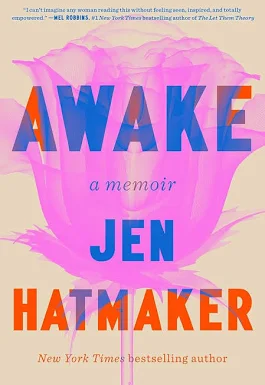
Years ago, as a young mom and aspiring author, Jen Hatmaker was all that I wanted to be. I saw myself in her frazzled authenticity, her flair for the dramatic, her diving in headfirst approach to life and faith. I was disarmed by her self-deprecating humor, which was such a breath of fresh air in the evangelical world of stay-at-home moms. This was the age of the mommy-blog, and Hatmaker struck a chord with those of us “in the trenches”, trying our best to live up to the impossibly high standards set for us, sometimes by others, but often by ourselves. With her big earrings and even bigger smile and personality, Jen felt like an example to aspire to and admire, as well as a reason to be real about one’s own failures and flaws.

I will confess, though, that while I often scrolled through her Insta and laughed and let out a sigh of relief that I wasn’t the only one whose kids were eating in front of the TV and calling it a picnic, relief and relatability weren’t the only feelings she inspired. I was sometimes overcome by feelings of envy and inferiority. It wasn’t just her life I coveted; we shared a publisher, and there were times when her level of success and reach felt so tantalizingly close, like staring over at the cool kid table, longing for someone to make eye contact and ask me to join them.

It wasn’t long into the promotion of my book that I realized the game of self-branding was not for me. I must admit, with regret and shame, that the temptation to view my family and life as a source of content rather than my primary mission in life was real. It is likely God’s grace that He didn’t allow my book sales to skyrocket or my speaking career to extend beyond the local churches of dear friends. At the time, Jen Hatmaker was a mirror into which I looked and saw my own heart’s darkness, a desire to measure myself not by how well I was completing the mission to which I had been called, but against the measure of how well someone else was completing theirs. I set aside my dreams of growing my brand as an author and sought to grow in my knowledge of the Author of my faith.

Fast-forward nearly a decade and a half to the present. I have seen Jen Hatmaker pop up on my radar now and then over the years: on HGTV, having her house renovated, coming out as gay-affirming in 2016, and the sad announcement of her divorce in 2020. By that time, my attention had shifted away from the world of women influencers. I was off social media for the most part and navigating a chaotic time in our own lives.

When, however, I saw Hatmaker had written a memoir, I was curious. Our life Venn diagrams still have a lot of overlap; we are both in our early fifties, learning to straddle the divide of parenting adults and younger kids simultaneously; we have both spoken out on political and cultural issues, though from different sides of the aisle; we both have some harsh critiques regarding the church in America.

Reading Awake, I didn’t walk away with any deep insights, theological or otherwise. I felt a deep compassion for Jen and her children, given the heartache they have experienced and had to navigate in the fishbowl of public interest and attention, though one does need to acknowledge that, for Jen’s part, this was attention she had fostered and benefited from for years. But that doesn’t make her pain less real, just perhaps more avoidable.

I have no desire to personally tear down Jen Hatmaker. And undertaking a deconstruction of her premises feels daunting given the structure, or lack thereof, of Awake. To summarize is impossible, but it does appear to me that Hatmaker has made the fatal mistake of exchanging one form of legalism for another. She notes many examples from her early life growing up and later in ministry of others casting pharisaical judgment on her, while at the same time she casts a plank-filled eye of judgment at those who do not share her political or theological perspectives. While I can certainly sympathize with the pain caused by the former, I believe it to be no more destructive than the latter. She has cast aside the prudes of the evangelical world only to cast her lot in with the puritanical progressives.

My greatest takeaway from the book was a sense of deep sadness that of all of the things Hatmaker has lost, her reliance on the Bible as a firm foundation on which to build (and rebuild) is by far the most tragic. On a much smaller scale, I understand what it is to be uprooted, to lose the part of one’s identity tied to community and public perception. I know the pain and questions that come from life-imploding, faith-threatening events. But I also know the sweet peace that comes after the storm if you anchor in the harbor of God’s trustworthiness.

I have never known the horror of marital betrayal Hatmaker experienced, awakening to the sound of her husband speaking words of love and devotion to another woman. My hope and prayer for her is that one day she will hear our Father’s voice, reminding her of His love and devotion. Then and only then will she be truly awake.

The Best and Worst of 2025

It has been another exciting year for the Spiegel family—more transitions and making new friends. In August Jim commenced his work as Executive Director of the Center for Faith & Life at Geneva College in Beaver Falls, Pennsylvania. He has rolled on to the Board of the Kalos Center and now hosts the Kalos Center Podcast on a part-time basis. Amy continued her work in Institutional Advancement at Hillsdale College but now working remotely in a role well-suited to her interests and skills. Maggie is a sophomore majoring in English at Wayne State University. Sam graduated from Taylor University last January. He is currently working for State Farm Insurance in Detroit and planning to attend graduate school next Fall. Bailey has been rooming with Sam in Detroit while working at Mad Nice Italian Restaurant, building on his art portfolio, and applying to MFA programs. And Andrew is a freshman at Hillsdale College, where he will likely major in Philosophy and Religion. We are excited about all of these developments, as our kids continue to grow into interesting and ambitious adults. Our family conversations about art, culture, philosophy, theology, and politics are more stimulating and enriching than ever. As usual, we are closing out the year with summary remarks about good and bad stuff related to film, music, books, sports, food, and family.

Film Experiences 

Jim: I’ll go from bad to best here, starting with Killers of the Flower Moon (2023) a somniferous waste of three hours, despite Leonardo DiCaprio’s lead role. Much better was Smile 2 (2024), which Maggie convinced me to see. I’m not into horror and generally avoid the genre, though my cousin Scott Spiegel (who, sadly, died this past year) made a Hollywood career out of directing horror films. My daughter seems to be the one in our family who inherited Scott’s love of horror. Anyway, Smile 2 scared me spitless. And Naomi Scott’s lead performance as a demonically tortured pop star was brilliant. I was enthralled by Anatomy of a Fall (2023), a carefully crafted French legal drama about the mysterious death of a husband and father. The acting was tremendous, and the film’s gradual plot revelations land hard. The film is also instructive regarding French criminal court procedure, which is fascinating. I’ve enjoyed the first season of Pluribus, the latest series from the mind of Vince Gilligan, the creator of Breaking Bad and Better Call Saul. The thought-provoking science fiction premise of Pluribus alone makes it worth watching. My favorite film this year was Small Things Like These (2024), an historical drama set in Ireland in the 1980s. It is an exquisitely directed and acted film that reaches into your soul.

Amy: I find myself at a distinct disadvantage because Jim has already named several of my favorites from this year, Small Things Like These being at the top of the list by a mile. I also enjoyed Everything Everywhere All at Once, which was flawed, but creative and well-acted. I am happy to report that Wake Up Dead Man, the third in the Knives Out series, was a vast improvement over the second, which is like saying eating ice cream is a vast improvement over a root canal. We’ve been enjoying Ken Burns’ American Revolution series on PBS, though it has taken us twice as long to watch because I keep insisting that we pause, fact-check and discuss every five minutes. Another highlight on the doc scene was I Like Me, a documentary about the life and work of John Candy. Named for a line from one of our family’s holiday favorites (Planes, Trains and Automobiles), it was exactly like so many of his great performances: funny, tragic, and touchingly human. The highlight of my film-viewing this year was actually at the movie theater, a rare occurrence these days. Andrew and I saw an unintentional double-feature spanning two nights when Mission Impossible: Final Reckoning self-destructed with just ten minutes to go and we had to come back the next night. We came early and amused ourselves by “guessing” upcoming plot twists. While not the best movie in the series, the stunts are out of this world and Tom Cruise’s dedication to his craft is commendable.

Food and Music

Amy’s Best Food Experiences of the Year: This year saw a lot of meals with friends and family which become more meaningful to me as they become less frequent. My mom, Sam and I had the pleasure of eating at Bailey’s restaurant with him as our server, which was very fun. I also got the chance to eat at Pierpont’s at Union Station in Kansas City with work colleagues. The excellence of the food was only surpassed by the exceptional service. But my highlight would be the discovery of The Deck Down Under, a hole-in-the-wall restaurant located a few miles from our home in Jonesville where we shared a couple of meals first with the boys just prior to their moving to Detroit and then with Andrew and his girlfriend to celebrate his high school graduation. Again, great food and service (truffle fries so good you want to duck under the table and lick the plate), but it was the conversation and laughter I will treasure most. 

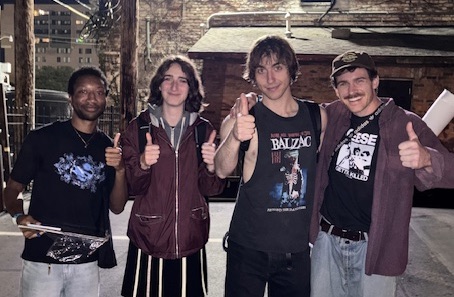
Jim’s Best Musical Experiences of the Year: I didn’t get out to see any concerts this year, but I did discover a lot of exciting new artists (well, new to me anyway), including Annika Kilkenny, Maya Hawke, Rob J Madin, Ray Lamontagne, Great Grandpa, Lily Allen, Birdtalker, Hurray for the Riff Raff and, my favorite: Geese. Their album 3D Country caught my attention at the suggestion of my son, Sam. Then came their current album, Getting Killed. Unlike their previous stuff, the band’s approach on this album feels entirely improvisational. Think Lift to Experience meets Van Morrison’s Astral Weeks with a dash of The Grateful Dead. Front man and lyricist Cameron Winter is a unique, compelling persona, confirmed by the fact that he was recently parodied on SNL. Sam and Bailey saw Geese live in Detroit a few months ago. And Sam was able to get a pic with the band after the concert, as you can see here.

Sports

Jim’s Favorite Sports Moments of the Year: 2025 was another year of “almosts” for my teams. While that meant disappointment for all of them in the end, the playoff run by the Indiana Pacers was a thrilling surprise. Since at the time of writing this the Indiana Hoosiers are #1 in the country and have a good shot at winning the college football national championship, I’ll call that my favorite sports “moment” of the year. Here’s to hoping that they don’t become my most disappointing sports memory of 2026! 

Amy’s Favorite Sports Moments of the Year: Over Thanksgiving, we had the joy of hosting my folks from Tennessee and the misery of watching every one of our teams lose. I’m not sure it counts as a sporting event, but cheering Sam and Andrew on during their first marathon this summer was a treat and seemed a rare instance in which the fans really do make a difference. Speaking of fandom, this year has seen a significant development for me as a sports fan. After years of existing in an NFL allegiance limbo, I have decided to become a Lions fan. I abandoned the Colts after a half-hearted effort to transfer my support from Peyton to Andrew Luck, only to be followed by a brief and lackluster commitment to the Carolina Panthers. Mainly, I want to have someone I can cheer on with Jim, and so the Lions it is.

Jim’s Most Disappointing Sports Moments of the Year: Amy’s notion that one can simply “decide” to become a fan of a team is interesting and worthy of analysis. But moving on . . .  My Detroit Lions getting bounced by the Washington Commanders in the first round of the NFL playoffs last January was probably the hardest loss of the year for me. The Indiana Pacers’ loss in game 7 of the NBA finals was disappointing, too, but like most people, I expected they’d lose, since Oklahoma City was so heavily favored and, okay, the better team. Still, it hurts to be that close and fall short.

Amy’s Most Painful Sports Moment of the Year: Hands down, it was my attendance of Andrew’s track meets this year. Who came up with this format?? One is expected to attend the entire 12-million-year-long meet, conveniently located seven hours from your house and bonus points for cold and rain while your child competes for approximately the wink of an eye, and the snacks are terrible. If any of my eventual grandchildren decide to run track, they will find me waiting in the car with an encouraging hug and a cup of hot chocolate.

Good Reads

Jim: Because of my work hosting the Kalos Center Podcast, I read more widely than usual this year. Oh, so many good books. I loved Anne Hendershott’s The Politics of Envy, which discusses the vice of envy as it manifests in many cultural contexts, from the academy to politics to social media. Robert Woodson’s Woodson Principles is an inspiring and practical summary of his proven approach to urban renewal, and Don Eberly and Ryan Streeter’s The Soul of Civil Society is a superb complement to this, providing many wise insights about civic engagement and democratic culture. I was deeply edified by John Perkins’ One Blood, perhaps the most biblically faithful work I’ve read dealing with race relations. And by “race”—following Perkins—I mean the human race). On the theological front, Michael Kruger’s Canon Revisited on the origin of the New Testament canon is the best volume I’ve read on the fascinating and sometimes bewildering topic of biblical canonicity. Dan Doriani’s Work: Its Purpose, Dignity, and Transformation is a superb introduction to a biblical theology of work. And I loved D. A. Carson’s Exegetical Fallacies, a book which I had never read in its entirety. Now I understand why so many scholars call this a “must read” for anyone interested in—and especially anyone who professionally does—biblical exegesis. My only real disappointment of the year was Christopher Watkin’s Biblical Critical Theory. While this book made good fodder for group discussion with the group of Columbus pastors I led as part of the Center for Christian Virtue’s Minnery Fellowship, I found many aspects of Watkin’s methodology to be disappointing.

Amy: Like Jim, I read a wide range of books this year. One of these was Birding to Change the World by Trish O’Kane. I couldn’t agree with this woman’s politics less, but I couldn’t stop reading the book and pondered it for weeks afterwards. My family is likely to write her hate mail for my new obsession with a bird-watching app I can’t get enough of. I loved The Hallmarked Man by Robert Galbraith, aka J.K. Rowling. She’s a literary genius who creates characters I can’t get enough of. What else can I say? Erik Larson’s The Splendid and the Vile is a very interesting look at Churchill leading up to and during the Battle of Britain. Allie Beth Stuckey’s Toxic Empathy is a succinct but powerful examination of virtue gone wrong. Lee Strobel’s Seeing the Supernatural is sobering and encouraging. And Harriet Beecher Stowe’s classic Uncle Tom’s Cabin and Garrett M. Graff’s The Only Plane in the Sky are my current reads in progress. Both of these are gripping portrayals of some of our country’s darkest days and the courageous efforts of many who lived through them.

Best 2025 Family Memories

Jim: Our annual Bell (Amy’s side of the family) summer reunion was a lot of fun again, this time spent at Donkey Town, an aptly named rental property in southern Indiana. Having the whole family together for Thanksgiving at our new home in Beaver Falls was a definite highlight, especially given the fact that our latest batch of eight Goldendoodle puppies were at peak cuteness and rambunctiousness at the time. By mid-December we delivered seven of them to their thrilled new owners, and we kept one—Pippet, named for the ill-fated dog in the film Jaws. Hopefully, our pup won’t meet such a gruesome end. We’ll be careful to avoid taking her to Amity Island during the summer months.

Amy: Empty-nesting with Jim as we settle into our new home in Pennsylvania has been a blast. While I was very sad to say good-bye to Michigan and a bit daunted by the prospect of starting over again, being reunited after a year of Jim splitting each week between his job in Ohio and our house in Michigan has been nothing but wonderful. Adjusting to the kids being gone has been hard, but I love seeing each of them forging their own paths in new settings and supporting them as adults rather than shepherding them as children. I also had the terrifyingly profound experience of delivering eight puppies by myself when our beloved Goldendoodle decided to give birth while Jim was out of town. And yes, Donkey Town was everything the name says and more.

New Year’s Resolutions

Amy: The upheaval of the last five years has served as an excuse for making less than stellar choices in the area of nutrition and exercise for me. Hoping to turn that around this year along with reading more and scrolling less.

Jim: I have committed to fasting (as a spiritual discipline) more consistently in 2026. It is amazing how much moral-spiritual power there is in this practice—sharpening the mind and improving self-control, which of course is a key fruit of the Spirit.

Happy 2026 everyone!

On Villains, Vengeance, and the Christian Hero

The Christmas story is about a certain Hero. But like all hero tales, the story also has its villains. When King Herod learned that the “king of the Jews” was to be born in Bethlehem, he set about apprehending the baby. This prompted an angel of the Lord to appear to Joseph in a dream, telling him “Rise, take the child and his mother, and flee to Egypt, and remain there until I tell you, for Herod is about to search for the child, to destroy him” (Mt. 2:13). Joseph and Mary obeyed this instruction, which served to fulfill the Old Testament prophecy, “out of Egypt I have called my son” (Hos. 11:1). When he realized he had been outsmarted, Herod was furious and ordered the slaughter of all baby boys in Bethlehem.

There are also villains who opposed Jesus during his three-year ministry. Twice during conversations with the Pharisees, they attempted to kill him. During the Feast of Tabernacles, Jesus proclaimed his equality with God, saying, “before Abraham was, I am.” We are told that his opponents “picked up stones to throw at him, but Jesus hid himself and went out of the temple” (Jn. 8:59). Later, during the Feast of Dedication, Jesus again enraged the Pharisees by asserting his divine identity when he said, “I and the Father are one” (Jn. 10:30). In response,  “the Jews picked up stones again to stone him.” But rather than smiting them, Jesus simply replied, “I have shown you many good works from the Father; for which of them are you going to stone me?” (Jn. 10:32).

At the end of his earthly ministry, there were many more villains who, together, succeeded in killing the Lord. Judas Iscariot betrayed him, the Jewish high priest Caiaphas, along with the Sanhedrin, sought to have Jesus executed for blasphemy, Pontius Pilate ordered the execution—despite his claiming innocence in the process—and Herod Antipas, the crowd, and the Roman soldiers who carried out the execution, all played their villainous roles.

Even after Jesus publicly rose from the dead, there was more villainy from the chief priests, Jewish elders, and Roman soldiers who attempted a cover-up of the resurrection (Mt. 28:11-15).

So many villains, and one Hero. It is easy to overlook the significance of the fact that, despite all of the treachery, lies, and murderous injustice, Jesus never sought revenge. On the contrary, he consistently reasoned with his opponents or else remained silent. He perfectly fulfilled his own radical counsel: “Do not resist the one who is evil. But if anyone slaps you on the right cheek, turn to him the other also” (Mt. 5:39).

The Apostle Paul would later reiterate Jesus’ teaching, saying, “Repay no one evil for evil, but give thought to do what is honorable in the sight of all. If possible, so far as it depends on you, live peaceably with all. Beloved, never avenge yourselves, but leave it to the wrath of God, for it is written, ‘Vengeance is mine, I will repay, says the Lord’” (Rom. 12:17-19). Paul, too, would abide by this counsel, even unto a martyr’s death. He too was a hero.

We all have villains in our lives, and accordingly we all face temptations to take revenge, whether in big or small ways. Even if we succeed in resisting the temptation of vengeance, we will deal with the temptation to resentment and holding grudges. This is essentially mental vengeance and can be just as psychologically and morally self-destructive as vengeful action.

But practicing forgiveness is often extremely difficult. When we struggle in this area, we should keep in mind not only how Jesus modeled forgiveness but also how God used the villains in his life to advance his cause. God parleyed their wickedness into the ultimate triumphant tale. And so it goes for those who obey Jesus—in heart and mind, as well as action—despite wicked opposition. The villains end up unwittingly serving the hero’s greater good.

This is one of the profound lessons of the story of Jesus, from Christmas through Easter. And it can be the story of our lives as well, as we deliver our own villains into the hands of God by loving and forgiving them. This is the way to triumph. It is the way of the Christian hero.

Before and After

Every life has a few before-and-after moments, some that are shared with others and some that are more personal. There are some before-and-afters that seem small but which have profoundly shaped my life. Before and after discovering the world of independent film. Before and after reading Jane Austen. Before and after realizing that food from other countries is better than chicken fingers.

Some moments are deeper and more life-changing. Before and after becoming serious about my Christian faith. Before and after becoming a wife and then a mom. Before and after 9/11, an experience many of us have had, in our own way, together. Wednesday was a day of two before-and-after moments. First, one moment, I was emailing a Hillsdale donor about the impact a single life can have on the world. The next, I was reading a message from Jim saying that Charlie Kirk had been shot. Then, I got on Twitter and inadvertently watched a video of Charlie being shot. One moment, I was waxing poetical about the price of liberty and the next I was watching someone paying the ultimate price. Before and after.

While we won’t know for days, months, or even years how Charlie’s death will reverberate throughout history, I know with certainty how it will echo through mine.

The fact of his death laid bare the stakes we are playing for in our current public discord. Labels of Republican and Democrat no longer really apply. You are now either on the side of life or the side of death. The contrast is too stark to ignore. This should be good news. Surely the cause of life is something most reasonable people can rally around. Aren’t the rights to “life, liberty and the pursuit of happiness,” all things that were just stolen from Charlie Kirk, things we all want to see secured for us all? We might disagree about how to pursue those things, or how to secure them for others, but good gravy, can’t we all say in unison, “I don’t want public figures being gunned down in public because they said something someone else disagrees with”?

So I resolved that I will hold out two hands from this day forward: the first will be a fist so tight that, to quote Ferris Bueller, if it held a lump of coal “in two weeks you would have a diamond.” In that fist, I will hold my unalienable rights, given by God to me and all my fellow citizens. And those rights will only be taken from me by force. I will not strike out with that fist, but I will cling to those rights for me, for my kids, and for all my fellow Americans to whom I will extend that second hand, in an attempt to bridge whatever divide separates us—in a desire to find a way to unite around values and principles we all hold dear. I will not join with those who seek to snatch my rights of life, freedom, and expression, but I will look for common ground wherever it can be found.

I said that I experienced two before-and-after moments on Wednesday. The first when I got the news and the second when I witnessed it with my own eyes. Despite initial news to the contrary, after seeing that video, I knew that Charlie Kirk was dead. Dead and yet . . . in all the horror of that moment, I felt as if I watched Charlie come alive. And that was the second “after.” Seeing that Charlie had not lost anything and he gained everything. My second resolve was to live in the light of that reality, that I have nothing to lose that anyone can take.

In times of discouragement or doubt, I can often be found, driving with the windows down, singing badly, but with great gusto, the Avett Brothers’ song “Ain’t No Man” the chorus of which is:

There ain’t no man can save me. There ain’t no man can enslave me. Ain’t no man or men that can change the shape my soul is in. There ain’t nobody here who can cause me pain or raise my fears. ‘Cause I got only love to share.

While I usually find this song quite uplifting and inspiring, it isn’t entirely true. There is a man who can save me. A man who died for the sake of the truth, and it wasn’t Charlie Kirk. It was the man who saved Charlie and me and anyone who will call upon His name. This is the man who was waiting for Charlie on Wednesday. He is waiting for us all. And this man, Jesus Christ, said of those who will trust Him, I give them eternal life, and they will never perish, and no one will snatch them out of my hand.” May we all reach out, as Charlie did, and take that hand until He sees us home.

Connecting the Dots

Several years ago, the Spiegel family spread out across multiple countries and continents in an unprecedented flurry of world travel. Jim was in Greece, Bailey in Israel, and Sam was in Bolivia while Maggie, Andrew and I kept the home fires burning back in Indiana. Multiple times a day, I would pull up our family chat and check the location of my family members. I got a rush of joy and a feeling of connecting to my far-flung husband and offspring as I watched them move jerkily across the screen like a technological version of the Marauders Map from Harry Potter. I am not sure that I could solemnly swear I was up to no good, but I did develop a terrible addiction. I became a “location dot” addict.

Something about seeing this tiny dot, so far away, made me feel closer to them. When everyone came home, I started checking to see if they had left soccer practice and were on their way home for dinner. Or if they were cutting it close for curfew. Now that we are quasi-empty nesters, I sometimes wake up in the middle of the night and double-check that they have all made it home safe and sound. Ironically, my mom has started doing the same to me. I get texts from her saying, “Are you working from home today?” or “Traffic bad? Why are you stopped in the middle of the interstate?”

I recently learned this is a “thing.” When referring to my locations addiction at work, a male co-worker said, “What is it with women and dots?” Until he asked, I didn’t realize there was a thing with women and their dots. I thought it was just me.

If this is, in fact, a female phenomenon, I imagine there is more than one answer to that question. Typically, women are “running the show” when it comes to the family schedule, coordinating drop-offs and pick-ups, mealtimes and bedtimes, invites, and events. So it makes sense that they would look for a “leg up” in keeping all their family ducks in a row. I will confess to sending an innocently worded “Almost home?” which, given the location of the recipient, could also have read “Why haven’t you left yet?” Entirely a truthful reflection of my knowledge of their whereabouts? No. Highly effective way to both avoid an argument and get them to hightail it home? Heck yeah.

But beyond the convenience as a tool of the homemaker, I think there is something deeper, more visceral that calls to our maternal nature when we seek to “find my.” If you aren’t an Apple user, “Find My” is the app for Mac users to find their devices, items (e.g., air-tagged car keys, etc.) and people. Perhaps it is a stretch, but this app presents women with a temptation eerily similar to that first forbidden fruit of Eden. Tempted by Satan to disobey God, Eve was told that in doing so, “your eyes will be opened and you will be like God, knowing good and evil.” (Genesis 3:5) What Satan predicted came true, Eve’s eyes were opened and she did gain the knowledge of good and evil, but she, along with all the women that followed, sure paid the price. Her relationship with God, Adam, and all of nature, even her own body, was irrevocably altered for the worse. The blessing of womanhood, our beauty, frailty, and unique reproductive role was turned against us in God’s curse and its devastating consequences.

Now I am fairly certain that I do not fall under God’s judgment each time I reach out and check my family’s locations. And I seriously doubt they are struggling under the burden of His wrath because I like to know where they are. But I do think there is a clear connection between Eve’s failure and my own obsession, both are rooted in a lack of trust and a longing for control. Eve didn’t want to obey; she wanted to rule. I don’t just want to know; I want to control. Somehow, I have convinced myself, however subconsciously, that by knowing where they are, I am protecting those I love. As if by knowing where they are, I am watching over them as well. But I am not, because I am not God. Only He can protect. Only He is in control. He not only knows how to find us, He knows how to bring us home. I am just an observer of dots. He is the one connecting us all.

Wanting is Needing

As the great philosopher Britney Spears once said, “Whoops, I did it again.” Or more precisely, we did it again. After two and a half wonderful years in Hillsdale County Michigan, I sit here writing while surrounded by the chaos of a house in flux. Some of the chaos is the kids’ preparing to move out on their own or head to college. While we are sad to have this, likely, final season of all the OG Spiegels under one roof coming to end, we are thrilled to see them moving on to new adventures.

But they aren’t the only ones heading for parts unknown. Jim and I too will be packing up and moving on and I must admit my heart is heavy with the thought of it. It isn’t just the dread of packing and unpacking a lifetime of possessions or choosing a new home, attending a new church, or deciding where to do our weekly grocery shopping. Don’t even get me started on figuring out what gas station carries my favorite beverages and how I can maximize their loyalty reward program. Nor is my grief isolated to the thought of saying goodbye to friends, some of whom it feels like I have waited a lifetime to know. It is all these things and so much more, something deeper that keeps crying out “This is not how it is supposed to be. Human lives aren’t meant for uprooting.”

I fully admit to being a creature of habit. I order the same favorites from my faithful favorite menus. I love to wear my favorite clothes into oblivion and re-watch my favorite films and re-read my favorite books. I value predictability over novelty, comfort over the unknown. If Forrest Gump is right and life is a box of chocolates, I prefer the box containing only one variety, please and thank you.

This afternoon, as I took a break from our pre-photo shoot house cleaning and decluttering session, I mustered up the energy for half-formed prayers of supplication, asking God “Why? Why is this necessary? Why can’t we stay?” And in that entirely predictable God-way, He answered by holding up a mirror to my heart and asking me to respond to my own question. What I saw there made clear the answer. I want things to be predictable because I want to be in control…which, needless to say, I am not. The very thing I want to cling to so badly, the illusion of control, is the thing I desperately need to let go, because it isn’t real. I may feel like I am clinging to reality, but really I’m grasping at thin air.

I’m like a passenger in a self-driving car whose destination has already been punched, but I insist on white-knuckling an imaginary steering wheel, pretending I’m the one driving and then banging my head against the dash when the car fails to respond to my commands. When life doesn’t go according to my plans, it isn’t because my GPS is malfunctioning. I am the problem, and God is gently but firmly reminding me that I’m not even the co-pilot in this scenario.

As I sat throwing an itty-bitty pity committee for myself today, a voice rose above the whining violin in my heart to sing a different song. This song says that loving anything above my Creator isn’t just wrong, it’s harmful. I can pretend it would be better for me to get what I want, but if what I want isn’t Him, then it’s not only not better, it’s the worst. By taking it away, God is revealing an idol, an area of wrongful worship and giving me the chance to lay it down and walk away.

But He isn’t asking me to walk away into the wilderness, into nothing. He isn’t calling me into a land of want, in the sense of deficiency. He is calling me to a land of wanting in the sense of desiring. Desiring the ultimate Good. He wants me to walk away from a place of want, of deficiency of Him in order to pursue wanting Him. And that is what I need even if it isn’t always what I want.

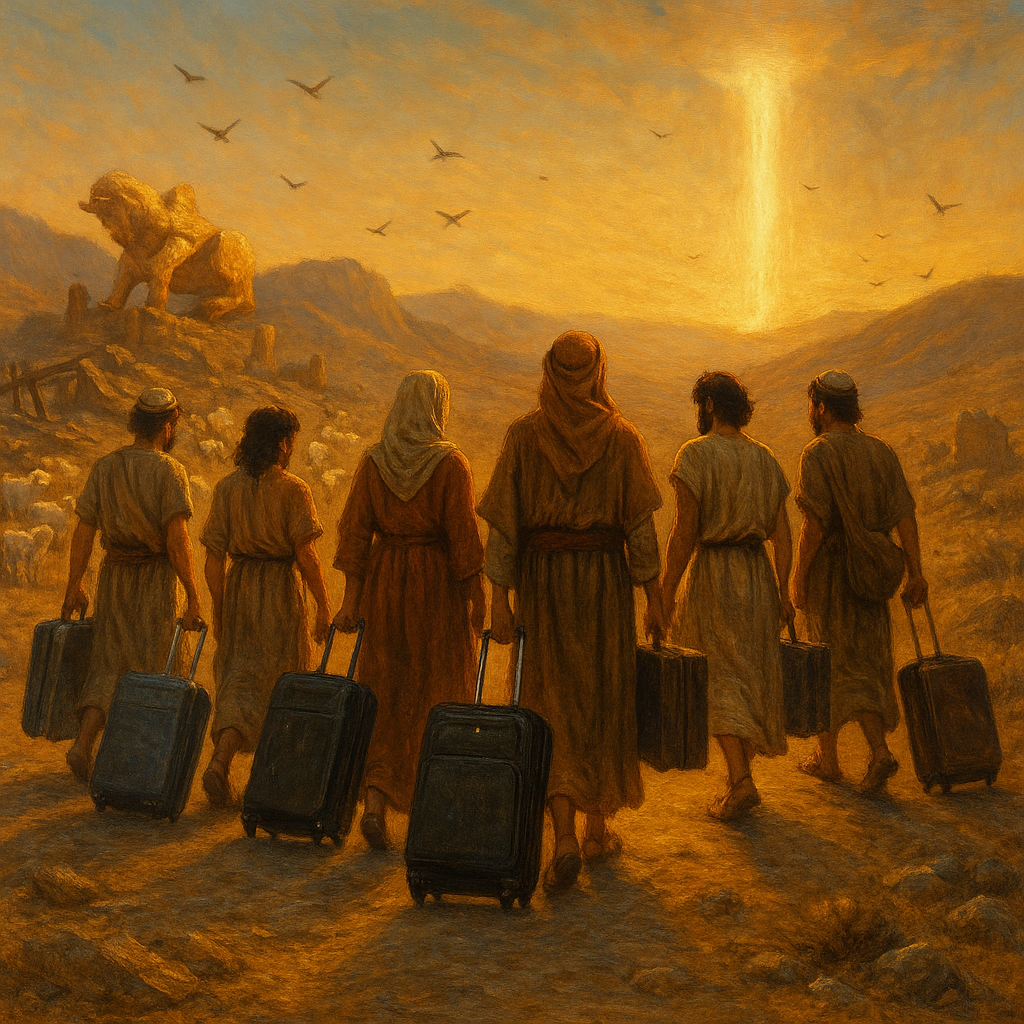
The Israelites walked away from Egypt, a place of great want in which they were slaves. They walked into what looked like a desert but in reality it was a path to the promised land, the land in which God dwelt, a land of plenty in which He would provide all they needed and more. Their short-sighted fallen hearts couldn’t help but look back, like Lot’s wife, longing for the familiar routine of enslavement.

I would love to laugh at them but I can’t. I’m too busy looking over my own shoulder with regret. As I sigh for what I want, I hear the voice of the One I need. And deep down I know, like David, He will turn “my wailing into dancing” and He will “clothe me with joy,” so my heart will sing His praises and not be silent even on the road to who knows where. Because that’s the road that will lead me to the thing I want and need, above all else. I just have to close my eyes, stop trying to navigate the way and tell myself “There’s no place like home. There’s no place like home.”

Weezer’s Albums Ranked Worst to Best

The first time I heard a Weezer song was in the Fall of 1994 at the university where I taught at the time. The song was “Undone” and while it was playing I asked a student, “Who is that band?” He sneered and said “Weezer” dismissively. The next day I went out and bought the album and was immediately amazed by what I heard. Over 30 years and hundreds of songs later, the band is still going strong and I love them more than ever. But many people still sneer at Weezer or at least don’t take them seriously. Why is this?

Several reasons, I believe. For starters, there is the band name, which is goofy. It originated with Rivers Cuomo’s father who would call his son “weezer” when Rivers was a little kid. Rivers liked the sound of it, so the rest is history. Another likely reason is that Weezer’s music is fun. Many of their songs are witty, satirical, or silly, and even on many serious songs there are funny turns of phrases that make us smile, all of which adds up to a band that has a generally campy aesthetic. This has been consistently reinforced by many of Weezer’s album covers, album titles, and their practice of repeatedly releasing self-titled albums, leaving it to journalists and fans to nickname them by their predominant colors. But perhaps the biggest reason why Weezer isn’t taken seriously is their unlikely front man. Shy, reclusive, self-deprecating, and well-educated, Rivers Cuomo is the archetypal anti-rockstar. Or, at least, his persona directly contradicts what we have learned to expect from a rock band’s central figure.

In light of all of this, those who are bound by rock culture categories will naturally be inclined to dismiss Weezer, perhaps seeing them as something of a jester in the court of modern rock. Add to this the fact that Rivers Cuomo doesn’t look cool. He looks more like an accountant or IT guy than anything we usually associate with rock stardom. Which is why it is so easy to miss the fact that he is a bona fide triple threat: A strong vocalist, a superb songwriter, and an excellent guitarist. Sadly, he is underrated in all three of those categories. But so it goes. Such must be the fate of anyone who so readily embraces the image of a dork.

Be all of that as it may, Weezer is a band to be taken seriously. Serious enough to be regarded as one of the great bands of all-time. This is despite the fact that their discography is wildly uneven in terms of quality, including several gems and some absolute stinkers. But, alas, every band whose career spans 30+ years has some bad albums to their discredit. What is fascinating about Weezer, however, is that, unlike most (all other?) bands, they have made their best music in their later years. Yet another way in which these guys don’t fit the mold.

Well, enough of this preamble. Let’s get down to business with my ranking of Weezer albums from “worst to first.” Unlike others who have done such rankings, I will lay out my assessment criteria so you’ll know the basis of my evaluations. I am using these four criteria: 1) musical quality, 2) lyrical quality (an often overlooked but critical aspect of song quality), 3) production quality, and 4) overall originality or innovation.

Weezer [The Teal Album] (2019) – Not rated due to incommensurability. In other words, as an album of covers it requires assessment by a somewhat different set of criteria than albums of original compositions. Among cover albums, I suppose I would arrive at a middling score of a C+ or B- (using a letter grade to help me resist any temptation to place it somewhere in the following ranking).

Now for the rest of the albums, I start from the worst and work upward. Brace yourself, Weezer fans; the first few may hurt. But hang in there. It gets better as you go!

Hurley (2010) – 1.6

In 2010 Weezer hit bottom with this misbegotten amalgam of bland melodies and trite lyrics. An album with literally no bright spots, it is as if they randomly selected a 10th grade kid from Podunk, USA and said “Here, write lyrics for 14 songs; you have one hour,” and this was the result. I can only think the band was somehow in need of money, or perhaps they did it on a dare and intentionally made a bad album. Whatever the explanation, Hurley goes down about as well as a diarrhea smoothie.

Death to False Metal (2010) – 2.7

To round out a year best forgotten in the history of Weezer, the band released this collection of re-recordings of leftover tracks from throughout their career. Biggest stinkers: “Everyone,” “Unbreak My Heart,” and the torturously wretched “Losing My Mind”—an excellent candidate not only for Weezer’s worst song but for the worst song of the decade by any artist. Even thinking about it puts me in a bad mood.

Make Believe (2005) – 3.5

Another poor effort overall, but with a few bright spots, including the opening track, “Beverly Hills,” which is Weezer’s satirical homage to Hollywood subculture. The next song, “Perfect Situation,” also works—a decent singalong. But from here it’s all downhill with non-stop lyrical drivel—clusters of cliches and lazy rhymes set forth in mostly somniferous packages with occasionally serviceable guitar lines. Make Believe is an album that makes you feel bad for the band—an aimless and uninspired recycling of mediocre ideas. The guys sound bored, though pretending otherwise. Make believe, indeed.

Weezer [The Red Album] (2008) – 5.5

A brief semi-recovery from the dreary aesthetic lowlands of Make Believe, the “Red album” has no cohesive identity but should be commended for its bold experimentation. It is Scott Shriner’s breakout album as a bassist and has some truly great moments. The album is replete with power chords, which is fine, but low on Rivers’ melodic lead work. The high points are clever power pop tunes like “Troublemaker” and “The Greatest Man that Ever Lived” (an epic tune, despite the talk-over, which is usually poison to a pop song but here adds to the comic effect). “Pork and Beans” is inane but it works somehow. The corny tribute “Heart Songs” kills the mood, and the three non-Cuomo songs in the middle of the album, though all earnest efforts, feel more like novelties and don’t strengthen the record.
Raditude (2009) – 6.1

Perhaps Weezer’s most critically panned album, I believe Ratitude is usually unfairly assessed. For all its quirks and strange turns, the album knows what it is: a party album. And an almost decent one at that. Weezer is goofing off here, and we love it. The production team, led by Jacknife Lee, temporarily rescues the band from its creative coma with crunchy textures, strong dynamics, and varied arrangements. Probably Weezer’s most danceable album. Definitely their best workout album. (Try it. I burn calories just listening while sitting still.) Most importantly, on this record Cuomo rediscovers some of his lyrical wit. The songwriting is generally helped by contributions from folks outside the band.

Weezer [The Green Album] (2001) – 6.4

Complicated by psychological wounds sustained from confused critical responses to Pinkerton, the “Green Album” was destined to be a safe, catchy retreat that takes no musical chances. It strives to be a high energy college rock album but is unwittingly marked by Cuomo’s melancholic disillusionment from unjust treatment of Pinkerton and, consequently, feels disingenuous. Despite good melodies and sweet harmonies throughout, there are too many vapid rhymes and lyrical cliches (including the most overused chorus lines on pop radio—e.g., “can’t you see,” “I’m lost without your love,” etc.) to be anything more than a mediocre album.

Van Weezer (2021) – 7.0

After a five year (and four album) hiatus from guitar-centric music, Weezer returned to their stylistic home base with this pure rocking collection. Sans the acoustic closer, the songs are uniformly metal-inspired, many of which showcase Cuomo’s superb lead guitar work. If the album title signals the fact that the album is a sort of tribute to the metal genre, the opening track, “Hero,” belies this: “. . . I tried to be a hero, but I was lying to myself. I walk alone.” It’s a powerful, and well-articulated confession in song. Something of which the young Rivers Cuomo seemed incapable. Besides “Hero,” however, there are just a few real highlights, including the Van Halen knock-off “The End of the Game” and the Ozzy-inspired “Blue Dream,” but, thanks to the guitar work and mostly decent lyrics, no real losers.

Pacific Daydream (2017) – 7.8

Though the opening song is named for an electric guitar, this album is decidedly not a guitar album. It’s more about dance grooves and synth pop. But it works. It has a consistent dreamy pop atmosphere. In that sense it is aptly titled. Lots of clever lines: “Everyone wants to be cooler than everyone else. It’s a hip-hop world, and we’re the furniture” (“Beach Boys”), “You’ve gotta choose between the Internet and me” (“QB Blitz”), and “You don’t have to die to go to heaven” (“Weekend Woman”). The album highlights are “Weekend Woman” and the closer, “Any Friend of Diane’s,” a danceable ditty featuring a classical guitar solo that, strangely, fits the song perfectly. An appropriate ending to an album that is surprising at many levels. Many critics complain that it’s a stylistic reach for the band. A reach, perhaps. But not out of their reach.

Pinkerton (1996) – 8.1

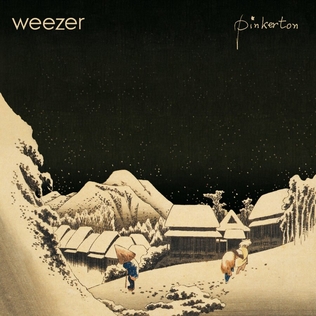
As a huge fan of the Blue Album, when Pinkerton was released, I was as surprised as anyone at the lo-fi turn the band took. But I was heartened by the clear indication the band refused to sell out. I also liked the raunchy keyboard sound that pervades the album and, of course, the lyrical vulnerability conveyed with raw vocals and minimal instrumental effects. It all showed these guys were for real and not just a pop rock outfit, daring to seriously address exasperation with the promiscuous rock star lifestyle (“Tired of Sex”) and sexual attraction to a minor (“Across the Sea”), among other difficult topics. So as negative reviews emerged, I was perplexed. But history has been kinder to the album, as its real quality has become evident to most music critics.

Maladroit (2002) – 8.3

Ironically titled given the depth and range of the album, Maladroit was a refreshing sign of musical growth, including the band’s first forays into heavy metal. It is also Pat Wilson’s breakout album on drums. His work on “Dope Nose,” “Keep Fishin’,” and “Burndt Jam” is especially strong. And the rhythmic turnarounds on “Fall Together” are super cool. Add to this some excellent lead guitar work and a lot of fun, nonsensical wordplay, and you have another distinct artistic advance for the band. The only significant low point is “December,” an unfortunately corny, if admittedly catchy, album closer. Cuomo sings, “Only trust can inspire soggy lungs to breathe fire.” Soggy lungs? Ohh-kay. An earnest but failed attempt at an inspiring rock anthem. In time, however, Weezer would succeed at this, and in big ways. Persistence pays!

Weezer [The Black Album] (2019) – 8.7

Horribly underestimated by most critics, in part no doubt due to a lack of interest or appreciation for lyrical quality, the “Black Album” was another step of maturation for Rivers Cuomo as a lyricist and the band as a whole for musical innovation. The album features more imaginative and creative humor, on a level with their “White Album” from three years earlier. Like that one, the “Black Album” is melodically and instrumentally rich and varied. There are lots of strong dance grooves to go with some excellent musical hooks. Also, some great lines, like: “the future’s so bright I gotta poke my eyes out” (“Can’t Knock the Hustle”), “life will make a beggar of rich men, bring the sovereign to his knees; and all the gold and all of the platinum melt like a chocolate sea” (The Prince Who Wanted Everything”), and “I don’t believe in mysticism, only in what science proves—like the sex appeal of your sick dance moves” (“Byzantine”).

Everything Will be Alright in the End (2014) – 9.3

Weezer’s “comeback album” after more than a decade of artistic doldrums. Was it Ocasek’s production? Cuomo’s brush with death? Creativity enhancing meditation? Who knows. Well-crafted songs, creative dynamics and arrangements, smart and sometimes introspective lyrics, inspired guitar solos, and ambitious vocals. The second half of the album might be the band’s strongest 6-song sequence, with two of the songs enhanced by female vocals. “The British are Coming” is one of Weezer’s very best—featuring a gorgeous melody, perfectly sung, and one of Cuomo’s most brilliant guitar solos, finished off with a killer outro. This is immediately followed by “Da Vinci”: Cuomo has written many songs about the unreachable, ineffably sublime girl, but this is his finest, complete with references to Stephen Hawking, the Rosetta Stone, the eponymous painter, and even the Gospel. All wrapped in an addictive cluster of melodies. Following this are the plaintive “Go Away,” featuring guest vocalist Bethany Cosentino, the genre-defying “Cleopatra,” and the touching “Foolish Father.” It all culminates in a soaring three-song suite to close the album. Wow.

Weezer [The Blue Album] (1994) – 9.5

What can be said that hasn’t already been said about this legendary Weezer premier? One of the all-time great album debuts, full of raw, youthful, catch-us-if-you-can energy. Uncommonly clever, if sometimes nonsensical, compositions packaged in walls of fuzzy power chords, pierced with hooky guitar solos, street-level vocals, all sprinkled with occasional dissonant guitar lines. Masterful production by the late, great Ric Ocasek, the ideal musical mentor for these determined grunge and 80s rock-inspired rookies who had no idea what lay ahead of them as a major rock band.

Weezer [The White Album] (2016) – 9.7

The ultimate “beach album” (as inspired by the band’s manager, Jonathan Daniel), complete with fully realized lyrical concepts, fresh melodic innovations, and, yes, some beachy themes.  Modern rock just doesn’t get any better than this. The album completes Cuomo’s decade-long trek from lyrical sloth to a genuinely smart, insightful, and even quotable songsmith. “We’ve  got the wind in our sail like Darwin on the Beagle and Mendel experimenting with the pea” (“Wind in Our Sail”), “We’re as happy as a couple Hare Krishnas” (“Good Thing”), “She swam away and flexed her mermaid tail” (“Summer Elaine and Drunk Dori”), “You’re the sun that I’m orbiting. I burn in your heat. Supernova and cosmic dust, you spawn galaxies” (“Jacked Up”). And then there’s Weezer’s single greatest song: “Thank God for Girls”—a lyrical journey that warrants an essay’s worth of analysis by itself. The White Album is not just a batch of hook-laden, super-singable, beach-inspired tunes. It is, at last, a lyrical effort worthy of the Harvard University English major graduate that is Rivers Cuomo.

OK Human – 9.8

Who would have thought Weezer was capable of something this smart and sophisticated? A baroque-style, fully orchestrated set of strikingly thoughtful compositions. And no electric guitars! The rich musicality throughout creates the ideal pallet for Cuomo’s substantive and moving lyrical ventures that include immersions in literature (“Grapes of Wrath”) and music (“Playing My Piano”) to insightful social commentaries on digital devices (“Screens”) and the psychological effects of statistics (“Numbers”) to a touching personal reflection about feeling past one’s prime (“Bird with a Broken Wing”). All of these songs are sandwiched between the plaintive opener “All My Favorite Songs” and the hopeful roundelay “Here Comes the Rain,” which, like several other tracks on the album, subtly packs a profound lyrical message. The string and horn orchestration and dynamics are exquisite, featuring seemingly endless layers of melodies and instrumental textures that perfectly serve the songs. Producer Jake Sinclair deserves as much credit as anyone here. The very idea of Weezer doing an album like this might have once seemed comical. (Yes, there are plenty of funny moments, but only because of Cuomo’s clever wit.) The truth is it all feels very natural and, well, authentically human.

SZNZ (2022) – 9.9

Technically, the SZNZ EPs are four separate releases. But because of their unifying theme and the fact that all of the songs came out of the same recording sessions, I regard SZNS as a single, albeit time-released, work. Indeed, Weezer’s greatest work. A consistently innovative blend of progressive rock, orchestral rock, baroque, and chamber music, with dashes of heavy metal, all with consistently strong lyrics. This is Rivers Cuomo at his most literate, smart, witty, personal, and compelling. SZNZ is loaded with seemingly endless pockets of melodies. Nearly every song has some interesting dynamic, whether a surprising arrangement, a challenging syncopation, an unexpected modulation, or creative musical sidebar, and usually a unique intro and/or outro. But nothing forced or pretentious. Just persistent, often stunning musical innovation. Lyrically, nearly every song is thought-provoking, many profoundly so, as in the case of “Lawn Chair” (on the origin of human suffering) “What’s the Good of Being Good,” (why be moral?), and “Should She Stay or Should She Go” (on Adam’s dilemma if Eve had succumbed to temptation in the Garden of Eden but Adam did not: “I could kick her ass out, move on with my life. Or I could follow her into the night”). Some more lyrical doozies: “I wish I could say it all to you in iambic pentameter. I’d improvise high notes like Thelonious when he’s jammin’ it” (“Iambic Pentameter”), “Why was I ever born and why did God make me? He must’ve been high when he dropped me down here” (“Dark Enough to See the Stars”), and “Lollygag in the lee of a highland ’til my ghost takes flight. In the sky I’m as high as a titan feeding on the fire, shattering those iron bars through the sky like shooting stars” (“Wild at Heart”). In addition to all of this, Cuomo’s voice is in top form. Underrated as he is as a guitarist, he’s probably just as underrated as a vocalist—like many great rock singers, not because of technical excellence but because of the personal connection he achieves and his ability to consistently match his vocal dynamics and emotion to each song’s meaning and mood. Simply put, SZNZ is an extraordinary achievement. If Weezer never records again, they will have gone out at their artistic peak. Brilliantly done, guys.

What Might Be or Could Have Been: Thoughts on Anxiety, Faith, and Providence

Several weeks ago a young friend of our family—I’ll call her Lisa—choked on a grape and required assistance in order to clear her windpipe and regain the ability to breathe. Once the grape was dislodged she was fine, and no medical attention was needed. However, understandably, Lisa was very shaken up by the incident, as were her parents.

In the days that followed, their entire family was prompted to some deep reflection about Lisa’s brush with death and the tragedy that was averted. As good friends of the family, we too reflected on the horrible “would could have been.” Eventually, this thought occurred to me: It was never God’s intention for Lisa to die that day, as is obvious from the fact that she did not die. In fact, from the standpoint of divine providence, it wasn’t even close. From our finite human perspective, yes, it seemed like “a close call.” But with God there are no close calls. There are just two categories: what he ordains and figments of our own imaginations.

A question for us, then, is whether we will let our imaginations cause us anxiety and fear.

Regarding the past, we may experience anxiety as we either regret or cringe over “close calls.” “If only I had done X, then situation Y would not have occurred.” Here we let our failure or oversight haunt us indefinitely. Or we may think, “if I had not done X, then this horrible thing would have happened. Oh no—I might not be so lucky next time!” In that case, we displace a positive turn of events with anxiety over a bad thing that nearly happened but didn’t.

And regarding the future, we worry over what might happen. “What if X happens, then Y or Z follows, which would be terrible!” Here we are allowing another kind of figment of our imagination to torment us. If it never happens, then we burden ourselves with something completely fictional. We are victims of our own psychological self-torture.

But, we may rationalize, doesn’t worry at least serve the positive function of preparing us for circumstances that will eventually come to pass? Well, not usually. This recent study showed that over 91% of the things we worry about never come true. And in the cases of many people, 100% of the things they dreaded never came to pass. This seems to suggest that worrying really is a waste of time and mental energy.

In all such cases, we choose to live in the subjunctive mood rather than reality. And we pay a costly price: peace of mind.

Of course, worry is a universal human experience. We all struggle with anxiety about the past and the future. The only differences among us is how much we do this.

In his Sermon on the Mount, Jesus addressed the problem, saying, “Do not be worried about your life, as to what you will eat or what you will drink; nor for your body, as to what you will put on. Is not life more than food, and the body more than clothing?” (Mt. 6:25). And his disciple Peter would later say, “cast all your anxiety on the Lord, because he cares for you” (1 Pet. 5:7).

These and other biblical admonitions seem to suggest that worry is under our control. As Kant’s dictum goes, “ought implies can.” That is, if there is a duty to do X, then we must be capable of doing X. If Scripture tells us to cast our anxiety on the Lord, then it must be possible to do this. But how?

I wish I had a simple formula, but I don’t. Prayer is an obvious starting point. Perhaps it’s also the ending point. And all the points in between. Also, I believe consciously leaning on the fact of divine providence is critical. If God really is in ultimate control of all that happens and “all the days ordained for me were written in [His] book before one of them came to be” (Ps. 139:16), then there is no reality beyond what he stipulates. I have found that serious meditation on this fact can be a powerful mental salve.

What could be or what would be (logical possibilities and causal counterfactuals) may be worth our attention for the sake of contingency planning. But we are wise to fight against the temptation to obsess over them. And it is the fight of a lifetime, since the temptation to worry is among the most persistent of all temptations in human experience.

So, in the end, like all temptations, worry is a test of faith. How much do we really trust God’s power, love, and faithfulness?

Death vs. Ascension

One of the most fascinating scenes in the New Testament—to my mind, at least—is the ascension of Jesus Christ. As Luke records the event in the book of Acts, he notes that after his resurrection, Jesus appeared to his disciples over a period of forty days and on one occasion:

They gathered around him and asked him, “Lord, are you at this time going to restore the kingdom to Israel?”

He said to them: “It is not for you to know the times or dates the Father has set by his own authority. But you will receive power when the Holy Spirit comes on you; and you will be my witnesses in Jerusalem, and in all Judea and Samaria, and to the ends of the earth.”

After he said this, he was taken up before their very eyes, and a cloud hid him from their sight.

They were looking intently up into the sky as he was going, when suddenly two men dressed in white stood beside them. “Men of Galilee,” they said, “why do you stand here looking into the sky? This same Jesus, who has been taken from you into heaven, will come back in the same way you have seen him go into heaven.” (Acts 1:6-11).

And that was the last they saw of Jesus. It was their final, unceremonious goodbye. And yet, apparently, there was no weeping or wailing. No one cried. No one mourned. In fact, the disciples simply got to work building the church and joyfully proclaiming the Good News.

What a contrast between this and when Jesus died six weeks earlier. And yet, from the standpoint of saying goodbye, at least as far as anyone could tell at the time, the situation was no different. A beloved friend was leaving for good. Why such a different response?

Was it the manner of death? This can’t be the explanation, since it is the loss of our loved ones that we mourn, not their manner of death. This is reflected in the (very reasonable) common expression, “I’m sorry for your loss.” We never say, “I’m sorry your loved one died the way they did.” Yes, an especially painful or violent death may exacerbate the pain of loss. But the essence of sorrow regards the loss of the person, not how they died. And yet, when Jesus ascended, the disciples lost their friend. So why no mourning?

Was it the presence of Jesus’ dead body that made his death so much more painful than his ascension? No, this can’t be it. If your loved one were to die in such a way that their body is out of sight or irretrievable (e.g., sunken in the ocean depths, lost in space, etc.) you would mourn every bit as much as if their lifeless body was present. The presence of a corpse may make some psychological difference (for better or worse), but that’s not the source of our sorrow. Again, it is the loss of the person we mourn.

Or maybe the difference lies in the fact that by the time Jesus ascended, he had proven he was the Messiah, that the disciples’ personal investment in him was not in vain, and that their trust in him was vindicated. Perhaps this is why
the disciples didn’t mourn his ascension. Again, this doesn’t account for the fact that, just as in the case of a physical death, by ascending Jesus was leaving them for good.

Or was he? It seems to me that the key to understanding the different responses is that Jesus’ ascension proved his departure was only temporary. That by his resurrection he proved that he had conquered death and that he could be trusted in his promise that he was going to return and bring about his everlasting kingdom. This meant, again, that the goodbye was not permanent but only temporary.

So the difference has to do with Gospel hope, something that the disciples definitely did not have immediately after Jesus was crucified and buried. In fact, they had lost all hope. But with the fact that the ascension occurred after his resurrection made all the difference. Moreover, his resurrection proved that all death is conquered and that, as Christians, all of our goodbyes are only temporary. And this is why the Apostle Paul would later dare to mock death, saying, “Where, O death, where is your victory? Where, O death, where is your sting?” (1 Cor. 15:55).

Of course, I am not saying that our mourning the death of friends and loved ones is not rational or that we lack faith in doing so. Rather, we mourn with hope. And, as Christians, we understand that our goodbyes really are temporary—that we, too, ascend after death and, like our Lord, we go to await our final reunion with the people of God. That is Gospel hope, and it makes all the difference in the world.

Staying on the Cross

In Martin Scorsese’s film The Last Temptation of Christ, Jesus’s last temptation is represented as the domestic life—to come down from the cross, take a wife, have kids, and live a normal family life. The film is a bit of fanciful celluloid imagination, but it gets this much right: Christ’s final temptation on earth was created by the mockers who challenged him to take himself down from the cross:

“It was nine in the morning when they crucified him. The written notice of the charge against him read: ‘The King of the Jews.’ They crucified two rebels with him, one on his right and one on his left. Those who passed by hurled insults at him, shaking their heads and saying, ‘So! You who are going to destroy the temple and build it in three days, come down from the cross and save yourself!’ In the same way the chief priests and the teachers of the law mocked him among themselves. ‘He saved others,’ they said, ‘but he can’t save himself! Let this Messiah, this king of Israel, come down now from the cross, that we may see and believe.'” (Mark 15:25-32)

Jesus resisted this temptation—something he could very easily have done, to relieve himself of such extreme torment and humiliation. But doing so would have undermined God’s perfect plan for the salvation of humanity. Jesus had to suffer in full in order to provide complete atonement for the human race. So Jesus had to submit completely, and, thankfully, he did.

Sometime before his crucifixion, Jesus told his disciples, “If anyone would come after me, let him deny himself and take up his cross and follow me. For whoever would save his life will lose it, but whoever loses his life for my sake will find it” (Mt. 16:24-26). This remark—like so many cryptic statements by Jesus—must have utterly confused them, not the least because they had no idea what fate shortly awaited Jesus. As we now know, it is not just a quaint, poetic expression but a metaphor we should seriously ponder for how it applies to us as Christ followers.

One application context is personal offense, specifically when a person refuses to apologize for a serious wrong committed against you, especially when this leads to public humiliation. If ever there was a time to urge someone to apologize, the sin of slander would probably be as compelling a reason as any. If you have already taken the steps of personal rebuke prescribed in Matthew 18 but to no avail, it can be tempting to “take matters into your own hands,” such as through spiteful treatment, public shaming, or worse. In the days of social media when discretion is an increasingly rare virtue, this can be especially tempting.

However, if their wronging you put you on this cross, so to speak, then any such responses may essentially be efforts to take yourself down from the cross rather than to “carry” it to the full extent God has ordained for you. When the Matthew 18 steps have been exhausted, I’ve resolved to eschew additional efforts and submit to whatever remaining suffering and slander may be meant for me. If Jesus tells me to deny myself, take up my cross, and follow him, then presumably this means I should be willing to remain on that cross as long as he stipulates.

Of course, there is a time and place to “escape” the torment of others, whatever form that might take, whether physical or psychological abuse, etc. And there is a time to confront people who owe you an apology for injustices and other wrongs that have caused you to suffer (as, again, we know from Matthew 18). But there is also a time to recognize when, humanly speaking, none of this is possible and only God can redeem the situation. Such is the time to remain on the cross and trust God for a moral resurrection within a human heart that only he can effect. That is my resolution, anyway, and it has been a blessed approach.